You spend $300 a month at the supermarket and order plenty of household goods online. Is the card with 6% back on groceries obviously better than the one with 3%? Only if the extra rewards cover the fee you will pay after the introductory year—and the online-shopping rewards you would give up.
Before entering a grocery budget, use our grocery-store rewards guide to separate qualifying supermarket spending from excluded purchases. Our cash-back cap guide explains the switch to a fallback card when a bonus allowance runs out.
Blue Cash Everyday vs. Blue Cash Preferred is a comparison of two American Express cards that solve different spending problems. The better choice depends on your own annual purchases—not simply the largest percentage on the card page.
This is a direct two-card decision. It calculates when Blue Cash Preferred’s grocery and streaming rewards can overcome its fee and when Blue Cash Everyday’s no-fee online-retail value is stronger.
Need cards from multiple issuers for online purchases? See our online-shopping card guide. Want a specialist card paired with a 2% fallback? See the two-card cash-back setup guide.
The 30-second verdict
Blue Cash Everyday
Get 3% on eligible U.S. online retail, supermarkets and gas, each on up to $6,000 in annual purchases, then 1%. Annual fee: $0.
Main catch: Online orders must meet Amex’s U.S. retail and physical-goods rules.
Check Everyday termsBlue Cash Preferred
Get 6% at eligible U.S. supermarkets up to $6,000 a year, then 1%, plus 6% on select U.S. streaming. Fee: $0 in year one, then $95.
Main catch: The $95 fee and supermarket-category exclusions can erase the extra rewards.
Check Preferred terms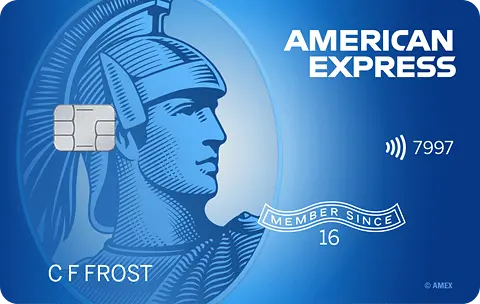 Blue Cash Everyday
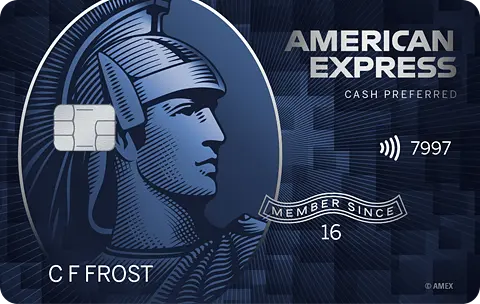 Blue Cash Preferred
Blue Cash Everyday vs. Blue Cash Preferred: Key Differences
| Decision factor | Blue Cash Everyday | Blue Cash Preferred |
|---|---|---|
| Annual fee | $0 | $0 introductory fee for the first year, then $95 |
| U.S. supermarkets | 3% on up to $6,000 per year, then 1% | 6% on up to $6,000 per year, then 1% |
| Eligible U.S. online retail | 3% on up to $6,000 per year, then 1% | 1% as other eligible purchases |
| Select U.S. streaming subscriptions | 1% as other eligible purchases | 6% when eligible |
| Transit | 1% as other eligible purchases | 3% when eligible |
| Disney Streaming Credit | Up to $7 per month after enrollment and eligible payment | Up to $10 per month after enrollment and eligible payment |
On a small screen, swipe horizontally to view every column.
What both cards have in common
- Gas: Both earn 3% at eligible U.S. gas stations; Everyday’s 3% is capped at $6,000 in annual gas purchases, then 1%.
- Foreign purchases: Both charge a 2.7% foreign transaction fee after conversion.
- Redemption: Both earn Reward Dollars redeemable as statement credits with no redemption minimum; statement credits do not pay the minimum due.
For merchant-category exclusions and payment rules, see Amex’s category definitions. For redemption mechanics, see Amex’s Reward Dollars guide.
Groceries: the fee changes the winner
Preferred leads on qualifying groceries. It earns 3 percentage points more than Everyday on eligible U.S. supermarket purchases until the $6,000 annual cap.
After year one: $95 ÷ 0.03 ≈ $3,167 a year (about $264 a month) in qualifying supermarket purchases. Your full answer also depends on online retail, streaming and transit.
At $6,000 in eligible supermarket spending, Preferred earns $180 more before fees, or $85 more after its $95 renewal fee. Spending above $6,000 earns 1% on both cards and does not add to that grocery-rate advantage.
The catch: A grocery bill at a superstore or warehouse club is not necessarily a supermarket purchase. Amex excludes superstores such as Target and Walmart, warehouse clubs, convenience stores and meal-kit delivery services from this category. Your actual qualifying grocery spend may be lower than your total food budget. Amex supermarket rules
Online shopping: Everyday’s strongest reason to stay
Everyday leads on eligible U.S. online retail. It earns 3% on the first $6,000 a year, then 1%. Preferred generally earns 1% on those same otherwise eligible purchases.
At $2,400 of qualifying online retail purchases, Everyday’s two-point advantage is $48 before counting the other categories.
The catch: Amex defines the category as purchases through a U.S. retail merchant’s website or app for physical goods or merchandise. Online travel, entertainment, restaurants and other services do not qualify for this bonus; paying in store for an online order, in-store digital-wallet payments and certain third-party installment payments can also fail the test. Online supermarket orders use the separate supermarket category instead of stacking an online-retail bonus. Amex online-retail rules For a wider look at payment-path differences, see CardTuned’s online-shopping card guide.
Streaming, transit and Disney credits: count only what you use
Preferred earns 6% on select U.S. streaming subscriptions, versus Everyday’s ordinary 1% on those services, and 3% on eligible transit versus Everyday’s ordinary 1%. Amex lists qualifying streaming providers and warns that a subscription billed through another platform or bundled with another service may not qualify. Do not assume every charge marked “streaming” earns 6%. Amex streaming rules
Compare only the extra Disney credit you can use
Both cards offer a Disney Streaming Credit: up to $7 monthly on Everyday and up to $10 monthly on Preferred for eligible enrolled subscriptions paid through the specified U.S. sites. The maximum difference is $36 a year, not $120. Count it only if you would already pay for a qualifying subscription, enroll, use the right card and receive an eligible charge each month; a single annual payment would not create 12 monthly credits. The 6% streaming reward is a separate Preferred feature; the examples below exclude Disney purchases and credits to keep that extra value from being assumed. Amex Everyday credit · Amex Preferred credit
Two budgets, two different renewal-year answers
Assume 12 months of eligible U.S. spending, with every transaction correctly classified; no welcome offers, introductory APR promotions, Disney credits, interest or non-category purchases. Both cards may have welcome offers, but offer amounts and eligibility vary, so neither is included in ongoing value. Eligible streaming in these examples excludes Disney charges. These are illustrative rewards, not a promise that a particular purchase will code as expected.
$4,200 supermarkets · $600 online retail · $300 eligible streaming · $1,800 gas
Everyday $201 · Preferred $235 net
Preferred wins by $34
$2,400 supermarkets · $2,400 online retail · $120 eligible streaming · $1,200 gas
Everyday $181.20 · Preferred $116.20 net
Everyday wins by $65
See the calculation and first-year difference
For the first budget, Everyday earns $126 + $18 + $3 + $54 = $201. Preferred earns $252 + $6 + $18 + $54 − $95 = $235. For the second, Everyday earns $72 + $72 + $1.20 + $36 = $181.20; Preferred earns $144 + $24 + $7.20 + $36 − $95 = $116.20. In Preferred’s first year, remove the $95 fee from these examples: it would earn $330 and $211.20, respectively, before any welcome offer. That first-year advantage can reverse at renewal.
Your own renewal-year shortcut, while category spending remains under the relevant caps, is: 3% of qualifying groceries + 5% of eligible streaming + 2% of qualifying transit − 2% of qualifying online retail − $95, plus only the incremental Disney credit you would actually use. Gas under Everyday’s $6,000 cap does not change this comparison. See CardTuned’s groceries-and-dining guide if your food purchases are split across different store types.
Which card should you choose?
- Choose Everyday when eligible online retail is substantial, supermarket spending is modest or the lasting $0 fee matters more than extra category management.
- Choose Preferred when you can document enough qualifying supermarket, direct-billed streaming or transit purchases to exceed the lost online-retail rewards and its $95 renewal fee. Recheck this choice before year two, when the introductory fee ends.
- Choose neither as your only card if you mainly buy groceries at excluded merchants, need a card for foreign purchases (both charge 2.7% after conversion), or spend mostly outside these bonus categories. A straightforward uncapped card may suit those purchases better; see CardTuned’s two-card cash-back setups for a way to cover category gaps.
Ready to check the details together? Compare Blue Cash Everyday and Blue Cash Preferred side by side, then apply the spending and fee examples in this article. If neither fits your store mix, return to the wider grocery-and-dining shortlist.
Before you apply
- Review your last 12 months of spending by eligible merchant category, not merely by the store’s name. Separate qualifying supermarkets from warehouse clubs and superstores.
- Estimate how much online spending buys physical goods from U.S. retailers, how many subscriptions bill directly from an Amex-listed provider, and what you already pay for Disney-eligible services.
- Check the current application pricing, APR, introductory offers, eligibility and complete benefit terms directly with Amex. Those variable application details are not included in the reward examples and can change. Interest or fees from carrying a balance can outweigh cash back.
Explore these cards
Review fees, rewards and conditions, and add cards to your comparison.