A 0% APR credit card can be useful when you already know a large expense is coming—a new laptop, furniture, a home repair, travel, or another purchase that would otherwise put pressure on one month’s budget.
If that expense is medical, see how to compare credit cards for medical expenses before deciding whether a promotional APR fits the bill.
But the best 0% APR credit card is not automatically the one with the longest promotion or the highest cash-back rate. Start with the monthly payment you can realistically afford, then use rewards and other benefits as tiebreakers.
Best for maximum payoff time
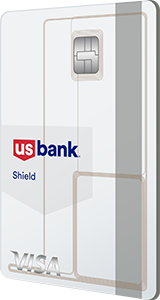
U.S. Bank Shield® Visa® Card
A 21-billing-cycle purchase APR promotion gives a large planned expense more time to breathe.
Best for rewards + 15 months
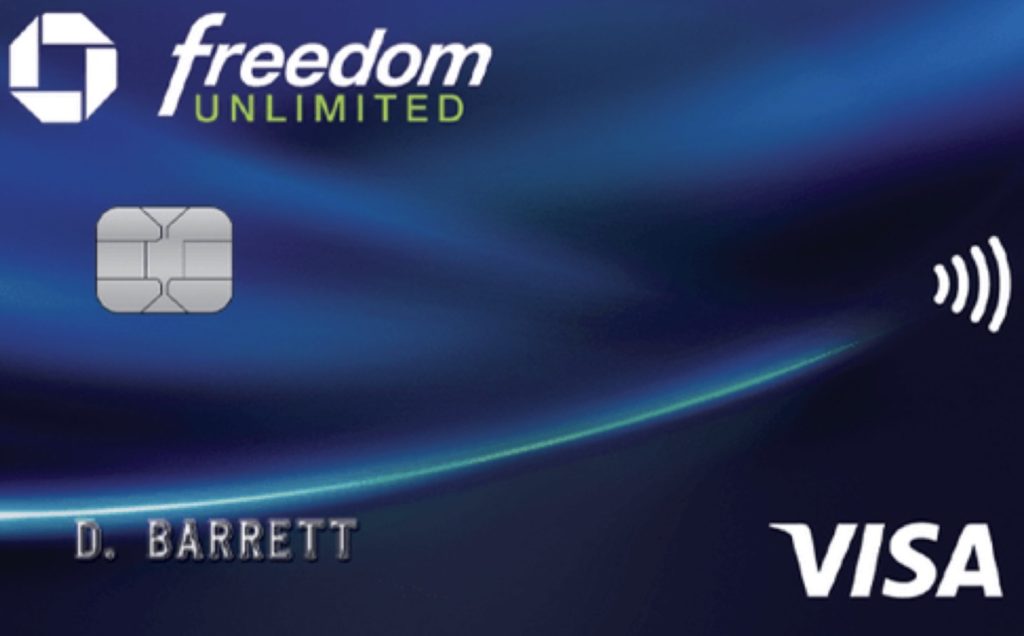
Chase Freedom Unlimited®
A useful middle ground if 15 months is enough and you want an everyday rewards card afterward.
Best for a bonus-category purchase
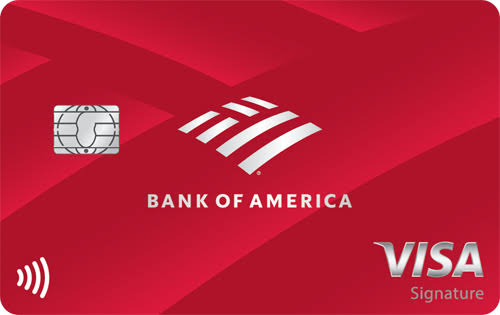
Bank of America® Customized Cash Rewards
Useful when a planned purchase fits the selected category—but the $2,500 quarterly cap matters.
Best for fast payoff + flat rewards
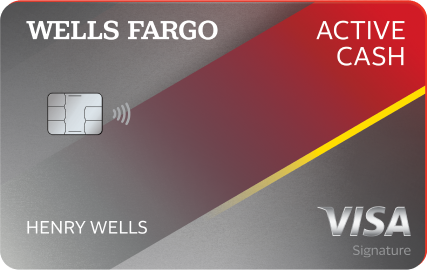
Wells Fargo Active Cash®
Unlimited 2% cash rewards can matter if you can clear the purchase within the shorter 12-month window.
Best for foreign purchases
Capital One Quicksilver
A 15-month intro period, 1.5% cash back, and no foreign transaction fee create a distinct use case.
What 0% Intro APR Actually Means
The cards in this guide are disclosed by their issuers as 0% introductory APR offers on purchases. That is different from a deferred-interest promotion advertised as “no interest if paid in full.” With a true 0% introductory APR, interest is not retroactively added for the promotional months simply because you still have a balance at the end; the regular APR begins applying to the remaining balance after the promotion ends.
That means your real target is not “make the minimum payment.” It is “pay enough each month to reach a $0 promotional balance before the intro period ends.”
The Number That Matters: Your Monthly Payoff Target
$6,000 ÷ 21 months ≈ $286/month
$6,000 ÷ 15 months = $400/month
$6,000 ÷ 12 months = $500/month
Billing cycles are statement periods, not a promise of exactly the same number of calendar months. The monthly illustrations assume roughly one cycle per month; use the actual promotional end date in your account disclosure. A safer plan is to finish one billing cycle early. For example, $6,000 over 20 months is about $300 per month, leaving a small buffer for timing or an unexpectedly expensive month.
Best for Maximum Payoff Time: U.S. Bank Shield® Visa® Card
Why it fits: Shield is the strongest fit here when repayment flexibility matters more than earning a high everyday rewards rate.
0% for 21 billing cycles
17.24%–28.24% variable APR
3%
Key details
- 0% introductory APR on purchases for 21 billing cycles.Catch: the regular variable APR applies after the promotional period.
- $0 annual fee.Catch: there is a 3% foreign transaction fee.
- 4% cash back on eligible prepaid air, hotel, and car reservations booked through the U.S. Bank Travel Center.Catch: this applies only to eligible prepaid air, hotel, and car reservations through the U.S. Bank Travel Center. Current program rules do not state a separate spending cap for this 4% Travel Center rate.
Main limitation
Shield’s everyday rewards are limited. Its reason to be here is the long financing window, not its cash-back program.
When Another Card Is Better
If you can comfortably repay within 12–15 months, a card with stronger everyday rewards may provide more value after the purchase is paid off.
Best for Rewards Plus 15 Months: Chase Freedom Unlimited®
Why it fits: Freedom Unlimited is for readers who do not need 21 months and want a card that remains useful for dining, drugstores, travel through Chase, and general spending after the intro period.
0% for 15 months
18.24%–27.74% variable APR
3%
Key details
- 0% intro APR for 15 months from account opening on purchases.Catch: the payoff window is six months shorter than the longest option in this guide.
- 3% cash back on dining and drugstores, 5% through Chase Travel, and 1.5% on other purchases.Catch: travel must be purchased through Chase Travel for the 5% rate.
- $0 annual fee.Catch: foreign transactions cost 3%.
Illustrative Reward Value
$6,000 × 1.5% = $90 cash back
That $90 is useful only if $400 per month—or another plan that clears the balance within 15 months—is comfortable.
Main limitation
The shorter payoff window matters more than the extra rewards if it forces a monthly payment that is too high for your budget.
When Another Card Is Better
Use a 21-cycle card when repayment flexibility is more valuable than the ongoing Chase rewards structure.
Best for a Purchase in a Bonus Category: Bank of America® Customized Cash Rewards
Why it fits: This card can outperform a flat-rate card when the purchase clearly fits the selected category—but only up to the cap.
0% for 15 billing cycles
17.49%–27.49% variable APR
3%
Key details
- 0% intro APR for the first 15 billing cycles on purchases.Catch: a variable APR applies after the promotional period.
- Ongoing 3% cash back in the category of your choice; the current first-year offer adds another 3% in that selected category.Catch: the choice category plus grocery-store and wholesale-club purchases share a $2,500 combined quarterly cap; spending above the cap earns 1%.
- You can select categories including online shopping and home improvement/furnishings. For the separate rewards question, compare online-shopping category definitions and checkout requirements.Catch: the account defaults to Gas & EV Charging Stations until you change it. You can change the category once per calendar month or leave the existing choice in place.
What the $2,500 Quarterly Cap Does to a $5,000 Purchase
Current first-year offer: ($2,500 × 6%) + ($2,500 × 1%) = $175
Ongoing structure: ($2,500 × 3%) + ($2,500 × 1%) = $100
The cap is why “6% cash back” should never be applied to the entire $5,000 purchase in this example.
Main limitation
The combined quarterly cap and merchant coding can materially reduce the effective reward rate on a large purchase.
When Another Card Is Better
Choose a flat-rate card when the merchant category is uncertain or when most of your purchase would land above the $2,500 quarterly cap.
Best for Fast Payoff Plus Flat Rewards: Wells Fargo Active Cash®
Why it fits: Active Cash trades a shorter intro period for a stronger flat rewards rate, making it most useful when you already know you can repay relatively quickly.
0% for 12 months
18.74%, 24.74%, or 28.74% variable APR
3%
Key details
- 0% intro APR for 12 months from account opening on purchases.Catch: this is the shortest payoff window among the cards in this guide.
- Unlimited 2% cash rewards on purchases, with no categories to track.Catch: rewards do not offset the cost of carrying a balance after the 0% period.
- $0 annual fee.Catch: foreign transactions incur a 3% fee.
Illustrative Reward Value
$6,000 × 2% = $120 cash rewards
The same $6,000 balance requires about $500 per month to clear in 12 months, so the 2% return is only attractive if that faster repayment schedule already works.
Main limitation
The shorter promotional window creates a much higher monthly payoff target than a 15- or 21-month card.
When Another Card Is Better
Choose a longer 0% card if a $500 monthly target on a $6,000 purchase would put pressure on your budget.
Best for a Large Purchase From a Foreign Merchant: Capital One Quicksilver
Why it fits: Quicksilver’s role is narrower than Freedom Unlimited’s: it is a practical choice when you want a 15-month purchase APR promotion and the planned transaction may be processed outside the United States.
0% for 15 months
18.49%, 24.49%, or 28.49% variable APR
$0
Key details
- 0% intro APR for 15 months on purchases under the current Quicksilver offer.Catch: Capital One notes that offers can vary, so confirm the exact application terms before applying.
- Unlimited 1.5% cash back on purchases.Catch: the flat rate is lower than Active Cash’s 2%.
- No foreign transaction fee.Catch: the merchant or payment network’s exchange rate can still affect the final dollar cost.
Main limitation
For a normal domestic purchase, Freedom Unlimited or Active Cash can offer stronger rewards. Quicksilver earns its place mainly when the $0 foreign transaction fee changes the economics.
When Another Card Is Better
Choose Freedom Unlimited for stronger bonus categories in the U.S., or Active Cash for a higher flat rate if you can clear the balance within 12 months.
Compare the Best 0% APR Credit Cards for Purchases
| Card | Welcome offer | Purchase intro APR | Post-intro APR | Annual fee | FTF | Best for | Main catch |
|---|---|---|---|---|---|---|---|
| U.S. Bank Shield Visa | No cash welcome bonus listed; $20 annual statement credit after 11 consecutive months of purchases | 0% for 21 billing cycles | 17.24%–28.24% variable | $0 | 3% | Maximum payoff time | Limited everyday rewards |
| Chase Freedom Unlimited | $200 after $500 in purchases in the first 3 months | 0% for 15 months | 18.24%–27.74% variable | $0 | 3% | Rewards + mid-length financing | Shorter window than Shield |
| BofA Customized Cash Rewards | $200 online bonus after $1,000 in purchases in the first 90 days | 0% for 15 billing cycles | 17.49%–27.49% variable | $0 | 3% | Eligible bonus-category purchase | $2,500 combined quarterly cap |
| Wells Fargo Active Cash | $100 after $500 in purchases in the first 3 months | 0% for 12 months | 18.74%, 24.74%, or 28.74% variable | $0 | 3% | Fast payoff + 2% flat rewards | Shortest window here |
| Capital One Quicksilver | $200 after $500 in purchases in the first 3 months | 0% for 15 months | 18.49%, 24.49%, or 28.49% variable | $0 | $0 | Foreign-merchant purchase | 1.5% flat rate |
On a small screen, swipe horizontally to view every comparison column.
A Longer 0% Period Can Be Worth More Than Extra Rewards
Same $6,000 Purchase, Different Trade-Off
12 months: $6,000 ÷ 12 = $500/month
21 months: $6,000 ÷ 21 ≈ $286/month
The 2% card could earn about $120. If $500 per month would be difficult but roughly $300 is comfortable, giving up the rewards for more repayment time can be the better financial decision.
Before You Apply
- Do not rely on a generic credit-score cutoff. Issuers do not publish a guaranteed score that assures approval for these offers. If an issuer offers prequalification, check whether it uses a soft or hard inquiry and remember that prequalification is not approval.
- Confirm you are applying for the new-account offer shown. Do not assume an upgrade, product change, or existing account will receive the same 0% purchase APR promotion.
- Calculate your own payoff target. Do not assume the minimum payment will clear the balance before the promo ends.
- Confirm the offer applies to purchases. Purchase and balance-transfer promotions can use different rules.
- Read the post-intro APR. A remaining balance can become expensive immediately after the promotional period.
- Pay every minimum payment on time. A late payment can trigger fees or penalty pricing, and a payment more than 60 days late can allow an issuer to end an introductory rate early.
- Check how payments are allocated if you mix balances. New purchases, cash advances, transfers, or installment-plan balances can have different APRs, and issuer rules determine where minimum and excess payments go.
- Distinguish true 0% APR from deferred interest. “No interest if paid in full” is not the same promise as “0% intro APR.”
- Finish early when possible. Leaving one billing-cycle buffer reduces timing risk.
If you are unsure how your statement balance, current balance, and minimum payment differ, read CardTuned’s Statement Balance vs. Current Balance guide before setting your payoff plan.
Which Card Should You Choose?
How We Evaluated These Cards
CardTuned reviewed currently available U.S. consumer credit cards with introductory APR offers that apply to purchases. We prioritized promo length, the monthly payment needed to clear a purchase balance before interest begins, post-intro APR, and late-payment terms. Annual fees, foreign transaction fees, rewards, category caps, and long-term usefulness were tiebreakers. We removed cards whose reader job substantially duplicated another pick. Welcome offers are shown separately and did not determine the financing rankings.
Card terms last verified: September 26, 2026 (UTC). Scope: the five cards’ purchase introductory periods, post-intro APRs, listed welcome offers, annual fees and foreign transaction fees. Issuer terms remain controlling; approval and personalized offers are not guaranteed.
Active Cash offer checked September 26, 2026: The public Wells Fargo offer linked here and its matching application disclosure (offer ID 012686I6F40000) both show a $100 bonus after $500 in net purchases within three months, 0% purchase APR for 12 months, then 18.74%, 24.74%, or 28.74% variable APR. We did not substitute a $200 offer from another page or channel. Offers can vary by application channel; review the disclosure attached to the offer you select.
Official sources checked
Editorial update — October 11, 2026: Reading order, labels and layout reviewed. This is not a new verification of all card terms; the source and verification notes retain their stated scope.
Explore these cards
Review fees, rewards and conditions, and add cards to your comparison.