Comparing Wells Fargo Autograph vs. Bank of America Travel Rewards starts with a full year of purchases, not just your next flight. If you travel a few times a year and want no annual fee, the key choice is category rewards versus a flat earning rate, and how you will redeem the points.
At a 1-cent point value, Autograph beats the base Travel Rewards rate when more than 25% of spending qualifies for Autograph’s 3X categories. An eligible Bank of America relationship bonus can reverse that result. The amount you can actually redeem also matters.
Compare the earning structure before the card names
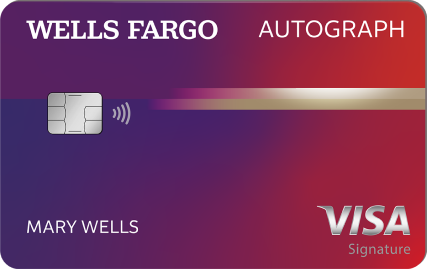
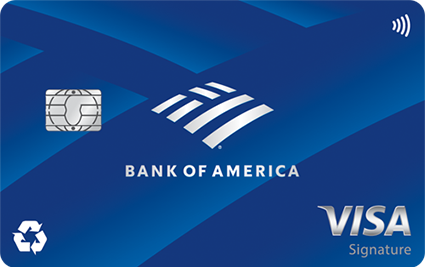
| Feature | Wells Fargo Autograph | Bank of America Travel Rewards |
|---|---|---|
| Annual / foreign transaction fee | $0 / $0 | $0 / $0 |
| Everyday earning | 3X on eligible restaurants, travel, gas, EV charging, transit, popular streaming, and phone plans; 1X otherwise | 1.5 points per $1 on purchases |
| Value used below | 1 cent per point for cash rewards | 1 cent per point toward eligible travel or dining statement credits |
| Important qualification | Merchant eligibility determines bonus earning | Cash redemption is lower: 0.6 cent per point |
On a small screen, swipe across the table to see every column.
The product pages and redemption terms support those rates. This is an ongoing-use comparison, so introductory bonuses, promotional APRs, transfer-partner valuations, and special travel-booking channels are excluded.[1][2][3]
A $24,000 year: compare identical purchases
Assume $8,000 qualifies for Autograph’s 3X rate and $16,000 earns its base rate. All purchases are fee-free, both accounts are paid in full, and the Travel Rewards holder has enough eligible travel or dining charges to use the stated point value.
| Calculation | Autograph | Travel Rewards |
|---|---|---|
| Points earned | ($8,000 × 3) + ($16,000 × 1) = 40,000 | $24,000 × 1.5 = 36,000 |
| Value at 1 cent per point | $400 | $360 |
| Difference | Autograph earns $40 more | The flat rate trails in this mix |
On a small screen, swipe across the table to see every column.
The $40 gap is modest. If only $4,000 of the same $24,000 qualified for 3X, Autograph would earn 32,000 points worth $320, while Travel Rewards would still earn 36,000 points worth $360. You do not need more travel spending to change the winner; your restaurants, transit, or phone plan may do it.
A point is not automatically worth the same amount
Travel Rewards statement-credit redemptions require eligible travel or dining purchases within the program’s redemption window. The current disclosure specifies a 2,500-point minimum and generally a 12-month purchase window, subject to its transaction limit. Cash redemption is 0.6 cent per point, so the same 36,000 points would produce $216 in cash instead of $360 toward eligible charges.[3]
If you travel rarely but regularly dine out, eligible dining credits can still make the 1-cent value usable. Check the current redemption interface and qualifying transactions before treating the entire point balance as an available bill credit.
An eligible relationship bonus can change the result
Bank of America’s current BofA Rewards program offers credit-card reward bonuses at eligible tiers, with enrollment and account requirements. A 75% bonus increases a 1.5-point base rate to 2.625 points per dollar. It is conditional, not the standard rate for every applicant. Under the current BofA Rewards program, the 75% bonus is the Premier tier, which requires an eligible checking account, enrollment, and at least $1 million in combined eligible balances measured under the program’s three-month-average rules.[5] The 2.625 figure is the mathematical rate before transaction-level rounding; your posted points may differ slightly.[4]
- Apply the actual tier
1.5 × 1.75 = 2.625 points per $1. - Keep spending unchanged
$24,000 × 2.625 = 63,000 points. - Use the same redemption basis
At 1 cent per point, that is $630, compared with Autograph’s $400 in our original spending mix.
At that earning rate, Autograph needs more than 81.25% of purchases in its 3X categories to lead in this simplified model. Do not move assets solely for this example without considering account costs, investment choices, and the returns you might give up elsewhere.
Choose based on the next ordinary year
Autograph fits a reader with substantial qualifying everyday spending who wants cash flexibility without maintaining a bank relationship. Travel Rewards fits a reader who wants a flat earning structure, can use qualifying statement credits, and especially one already eligible for a meaningful relationship bonus.
Use last year’s purchases, subtract fees and interest you would incur, and check which redemptions you can use. If both outcomes are close, keeping an existing no-fee setup may be easier than adding another account. See the broader no-annual-fee travel-card comparison for alternatives that solve different travel needs.
Sources and verification
Terms checked October 17, 2026. Offers and account terms can change. Examples labeled hypothetical are calculations, not product offers.