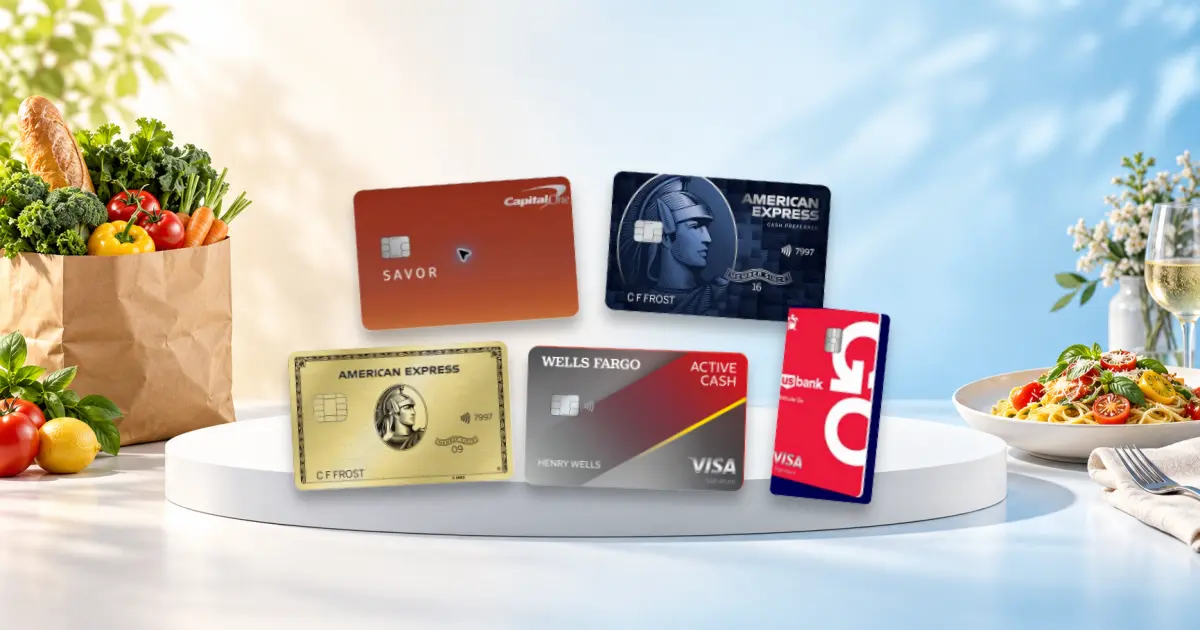
Groceries and restaurant bills may share the same monthly budget, but credit cards rarely treat them the same way. A high supermarket rate can come with a low cap or exclude the stores you use, while a strong dining card may earn only 1% on everything else. The best credit cards for groceries and dining in 2026 are the ones whose qualifying categories, fees and redemption rules match your actual spending—not simply the largest percentage in an advertisement.
Not sure whether your regular store qualifies? Our Amex and Chase grocery-store rewards guide separates eligible merchants from common exclusions. Check the Chase Freedom Flex Q4 2026 analysis for the seasonal alternative, and use the Everyday vs. Preferred comparison when choosing between those two Amex cards.
How to Compare Grocery and Dining Cards
- Start with where you shop. “Grocery store” usually means the merchant category assigned by the payment network. Superstores, warehouse clubs and specialty stores may not qualify.
- Annualize every cap. A 6% rate on the first $6,000 of supermarket purchases is not an uncapped 6% card.
- Subtract the annual fee. Use ongoing rewards and credits you would naturally use. Do not justify a fee with a one-time welcome offer.
- Value points realistically. Cash back is straightforward; travel points can be worth more or less depending on how they are redeemed.
- Check the rest of the budget. If most spending falls outside groceries and dining, a 2% catch-all card can beat a specialized card overall.
Dining is usually broader than grocery earning, but it still depends on merchant coding. Hotel restaurants, food courts, cafés, bakeries, bars and third-party delivery orders can post differently from what their everyday description suggests. The issuer does not control the code a merchant submits. If warehouse-club spending dominates your budget, compare merchant eligibility carefully before defaulting to a general-purpose grocery card.
Best Overall Cash Back: Capital One Savor
Verdict: Savor is the cleanest starting point for a household that wants one no-fee card for both food categories.

Key Benefits
- Unlimited 3% cash back at eligible grocery stores and on dining.Catch: Capital One excludes superstores such as Walmart and Target from its grocery-store category.
- Unlimited 3% on entertainment and eligible popular streaming services.
- Unlimited 1% on other purchases, a $0 annual fee and no foreign transaction fees.
How the Value Works
There is no cap calendar to track. Capital One includes restaurants, cafés, bars, lounges, fast food and bakeries, subject to merchant coding.
Main Catch
The grocery definition is narrower than “any store that sells food.” Warehouse-club and superstore shoppers should not assume 3% will apply.
When Another Card Is Better
Choose a flat-rate card if most of your spending is outside Savor’s bonus categories, or Blue Cash Preferred if qualifying supermarket spending is the clear priority.
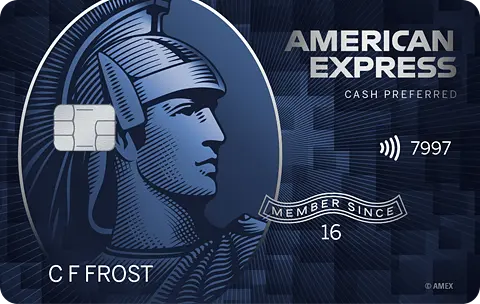
Best for Grocery-First Spending: Blue Cash Preferred Card
Verdict: This card can reward a household that spends close to the supermarket cap, but it is not a dining card.
Key Benefits
- 6% cash back at U.S. supermarkets on up to $6,000 per calendar year, then 1%.Catch: superstores, convenience stores, warehouse clubs, specialty stores and meal-kit delivery services are not considered U.S. supermarkets by Amex.
- 6% on select U.S. streaming subscriptions and 3% on eligible transit and U.S. gas-station purchases.
- 1% on other eligible purchases, including ordinary restaurant spending.Catch: A 2.7% foreign transaction fee applies to each transaction after conversion to U.S. dollars.
How the Value Works
The ongoing $95 annual fee creates a simple break-even test. Compared with a no-fee 3% supermarket card, the extra 3 percentage points recover $95 after about $3,167 in qualifying annual supermarket purchases. That comparison assumes neither card’s other benefits change the result.
Main Catch
The 6% grocery rate ends after $6,000 of annual purchases. Spending above the cap earns 1%, dining earns the base rate, and foreign transactions carry a 2.7% fee after conversion to U.S. dollars.
When Another Card Is Better
Savor is usually better when grocery and dining spending are balanced. Active Cash is safer when most grocery purchases occur at merchants that Amex excludes.
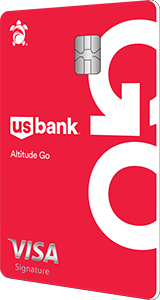
Best for Dining-First Spending: U.S. Bank Altitude Go
Verdict: Altitude Go favors frequent restaurant spending while still giving eligible grocery purchases a smaller bonus.
Key Benefits
- 4X points on dining, takeout and restaurant delivery on the first $2,000 in qualifying purchases each quarter.Catch: restaurant, fast-food and bar purchases above the quarterly cap earn the base rate.
- 2X at eligible grocery stores, gas and EV charging stations, and qualifying streaming services.
- 1X on other eligible purchases and no annual fee.Catch: A 3% fee applies to each foreign transaction.
How the Value Works
The dining cap annualizes to $8,000. Wholesale clubs and discount supercenters such as Target and Walmart earn only 1X.
Main Catch
Redemption value can vary. U.S. Bank says maximum point value applies to deposits into an eligible U.S. Bank account, while other redemption options may differ. Minimum redemption amounts can vary, and points expire after 12 consecutive statement cycles with no reward, purchase or balance activity. The card also charges a 3% foreign transaction fee.
When Another Card Is Better
Savor is simpler for balanced spending. Amex Gold can suit higher dining spenders who can justify its fee and use Membership Rewards well.
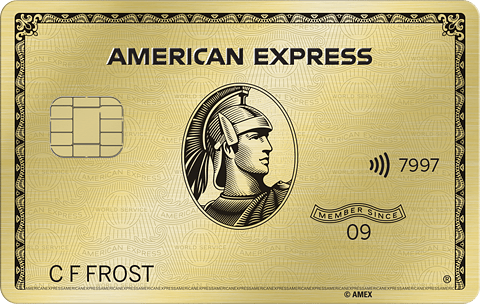
Best for Travel Points: American Express Gold Card
Verdict: Amex Gold is the strongest premium food-rewards option here, but only for readers who can use the points and recurring credits well enough to overcome a $325 annual fee.
Key Benefits
- 4X Membership Rewards points at restaurants worldwide on up to $50,000 in purchases per calendar year, then 1X.
- 4X at U.S. supermarkets on up to $25,000 per calendar year, then 1X.Catch: Amex excludes superstores, convenience stores, warehouse clubs, specialty stores and meal-kit delivery services from its supermarket category.
- 1X on other eligible purchases, no foreign transaction fees and access to eligible point transfers.
How the Value Works
The caps suit larger budgets, but the fee changes the comparison. Dining, Uber Cash, Dunkin’ and Resy benefits help only when enrolled and naturally used.
Main Catch
The card’s value depends on redemption skill and natural use of several restricted credits. Treating every credit at face value can overstate the result.
When Another Card Is Better
Choose Savor when cash back and simplicity matter more than transfer partners, or keep your current card if the credits would not offset the fee.
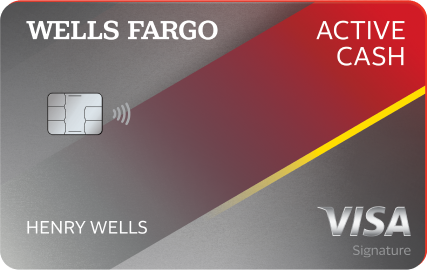
Best for Flat-Rate Simplicity: Wells Fargo Active Cash
Verdict: Active Cash is the practical baseline when store exclusions, caps or a second card are not worth managing.
Key Benefits
- Unlimited 2% cash rewards on net purchases.
- No category activation, grocery definition or reward cap.
- $0 annual fee.Catch: a 3% foreign transaction fee applies to purchases converted to U.S. dollars.
How the Value Works
The same 2% rate covers eligible purchases at supermarkets, warehouse clubs, superstores, restaurants and ordinary merchants, making it a useful benchmark.
Main Catch
It gives up the chance to earn 3% to 6% in a well-matched category.
When Another Card Is Better
Choose Savor when a large share of spending reliably earns 3%, or pair Savor with Active Cash if managing two cards remains easy.
Best Credit Cards for Groceries and Dining: At-a-Glance Comparison
| Card | Best for | Groceries | Dining | Annual fee | Main catch |
|---|---|---|---|---|---|
| Capital One Savor | Balanced cash back | 3% eligible stores | 3% | $0 | Superstore exclusion |
| Blue Cash Preferred | Grocery-first | 6% to $6,000/year, then 1% | 1% | $0 intro first year, then $95 | Cap, exclusions and 2.7% foreign fee |
| U.S. Bank Altitude Go | Dining-first | 2X eligible stores | 4X on first $2,000/quarter | $0 | Quarterly cap, redemption limits and 3% foreign fee |
| American Express Gold | Premium travel rewards | 4X to $25,000/year | 4X to $50,000/year | $325 | Fee and recurring-credit complexity |
| Wells Fargo Active Cash | Best for flat-rate simplicity | 2% | 2% | $0 | No category upside |
Simpler card-by-card comparison
- Savor: 3% on eligible groceries and dining; $0 annual fee. Superstores are excluded.
- Blue Cash Preferred: 6% at U.S. supermarkets on up to $6,000 per year, then 1%; $0 introductory annual fee for the first year, then $95.
- Altitude Go: 4X on dining up to $2,000 per quarter; $0 annual fee. Redemption rules matter.
- Amex Gold: 4X at restaurants and U.S. supermarkets, subject to separate caps; $325 annual fee.
- Active Cash: 2% on purchases; $0 annual fee. No bonus-category upside.
Which Card Should You Choose?
- Choose Savor if you want one no-fee cash-back card for qualifying groceries and dining.
- Choose Blue Cash Preferred if qualifying supermarket spending is high enough to offset the ongoing fee and dining is secondary.
- Choose Altitude Go if dining is the larger category and your quarterly restaurant spend stays near or below $2,000.
- Choose Amex Gold if you value Membership Rewards and can naturally use enough credits to justify $325.
- Choose Active Cash if you shop heavily at warehouse clubs or superstores, or want one rate for everything.
- Consider two cards if Savor for food plus Active Cash elsewhere adds enough value to justify another account. See our two-card cash-back setup guide.
Consider no new card if you would carry interest, spend more to chase rewards or gain only a small amount after fees.
Before You Apply
- Check the current issuer offer, annual fee, foreign transaction fee and eligibility language.
- Review where your main grocery merchants are likely to code; do not assume Walmart, Target or a warehouse club qualifies.
- Calculate the effect of annual or quarterly spending caps.
- Compare the result with a 2% flat-rate card and your existing cards.
- Pay the statement balance in full when possible. Interest can erase far more value than rewards earn.
For more category-specific options, compare our guides to two-card cash-back setups and credit cards for online shopping.
Explore these cards
Review fees, rewards and conditions, and add cards to your comparison.