Your first card needs a realistic path to approval, no annual fee, useful rewards, and terms you can manage while building credit, not luxury perks.
If you are weighing a family member’s account against opening an account yourself, compare authorized-user access with your own first card before choosing an application route.
This guide focuses on cards for enrolled college students, including students who are new to credit. If you are not a student and have no U.S. credit history, start with our first credit cards with no credit history guide instead.
Updated October 30, 2026 · Selected terms checked October 30, 2026. See the verification scope and editorial disclosure below.
Best credit cards for college students in 2026: quick picks
| Card | Fits best | Core rewards | Welcome offer | Purchase APR |
|---|---|---|---|---|
| Capital One Savor Student | Food, streaming and entertainment; our overall pick when the categories fit | 3% in eligible everyday categories, 1% elsewhere; eligible portal bonuses below | $50 after $100 in purchases within 3 months | 18.74%–28.74% variable; no intro rate advertised |
| Discover it Student Cash Back | No-score applicants who will activate and track quarterly categories | 5% in activated categories on up to $1,500 each quarter, then 1%; 1% elsewhere | Automatic first-year Cashback Match for eligible new cardholders | 0% on purchases for 6 months, then 16.74%–25.74% variable |
| Capital One Quicksilver Student | Simple rewards and study abroad; both Capital One picks have an ITIN route | 1.5% on ordinary purchases; eligible portal bonuses below | $50 after $100 in purchases within 3 months | 18.74%–28.74% variable; no intro rate advertised |
| BofA Travel Rewards Student | Students who qualify and will use travel or dining statement credits | 1.5 points per $1; 3 points on eligible BofA Travel bookings | 25,000 online points after $1,000 in purchases within 90 days; $250 toward travel or dining | 0% for 15 billing cycles, then 17.74%–27.74% variable; transfer conditions below |
Can you apply? Student eligibility and documents compared
Before comparing rewards, check whether your enrollment and identification fit the application. The two Capital One cards share the student definition below, so choosing between them is mainly a spending decision once you meet the requirements.
| Card | Student status and credit | Identification and information to prepare |
|---|---|---|
| Capital One Savor Student Capital One Quicksilver Student | Enrolled at an accredited higher-education institution, or admitted and planning to enroll within 3 months. Capital One describes both as options for limited or no credit history; Savor’s product page also explicitly says no credit score is required to apply. | SSN or accepted ITIN; address, date of birth, income and school information. Keep enrollment or admission evidence available if requested. See the international-student checks below. |
| Discover it Student Cash Back | No credit score required to apply; an available score may still be used. Be ready to verify enrollment with your name, school and enrollment dates. | Income, contact details and identity information requested by the application. Confirm the accepted identification route before applying. |
| Bank of America Travel Rewards for Students | Marketed to students; the product page reviewed does not define an admission-before-enrollment window or a minimum credit score. | Prepare the income and identity details requested by the application. Confirm accepted identification and the application route with BofA. |
International students: an ITIN is an application route, not an approval promise
Capital One’s ITIN guidance names both Savor Student and Quicksilver Student as cards an eligible applicant may obtain with an ITIN. The choice between them still depends on spending, enrollment, income, identity, address and the issuer’s review; Quicksilver does not have an exclusive ITIN advantage.
We have not established a current product-specific ITIN route for Discover Student or BofA Travel Rewards Student from the reviewed pages. That is an information gap, not proof that either issuer rejects all ITIN applicants. Confirm the card and application method with the issuer before submitting an application. With no SSN or ITIN, ask which identification is accepted rather than assuming any student card will work.
What to have ready: your current address, date of birth, contact details, school information, income estimate and monthly housing payment. If verification is requested, an enrollment letter, transcript or student ID may help establish student status; pay statements or an employer letter may help establish income. These are preparation examples, not a promise that every issuer accepts the same documents or requires uploads from every applicant.
Under 21? The issuer generally must assess your independent ability to pay, unless a qualifying co-signer or joint applicant aged 21 or older is available. Do not assume an issuer offers that option. Follow the application’s income instructions and our guide to what counts as credit-card application income.
Capital One and Discover provide preapproval checks; BofA’s student page links to prequalification. Read the tool’s terms and the offer it returns. A preliminary result is not final approval, and a full application can involve a hard credit inquiry. Apply selectively and plan to pay the statement balance in full.
Sources: Savor student definition; Quicksilver student definition; Capital One ITIN guidance; Capital One application preparation; Discover eligibility; Discover document examples; BofA student product and prequalification; BofA application FAQ; CFPB under-21 rule.
Offers apply only when the applicant and account meet the issuer’s terms. The displayed Capital One $50 offers exclude existing or previous cardmembers who received a new-cardmember bonus for the same product in the past 48 months. Approval, credit limit, and APR depend on the issuer’s review. For offers with a spending target, check how eligible purchases, returns and deadlines affect welcome-offer spending.
Choose your starting point
Work through these checks before comparing rewards. A student label or a preapproval result does not guarantee approval.
- 1. No U.S. credit score?
Start with Discover’s no-score application policy and Capital One’s student options. Savor also explicitly allows an application without a score. A thin file is different from a history of missed payments. - 2. ITIN instead of an SSN?
Check the published Capital One route for both student cards, then confirm your income, school and identity requirements. For another issuer, confirm its exact product and application method first. - 3. Planning a semester abroad?
Compare Quicksilver for simple rewards, Savor for eligible categories, or BofA for travel and dining credits if you qualify. Check local acceptance and carry a backup payment method.
Then choose by budget: food-heavy spending → Savor; one everyday rate → Quicksilver; activated quarterly categories → Discover. If you are not enrolled or cannot qualify, review the first-card and secured-card routes.
Capital One Savor Rewards for Students: Best overall
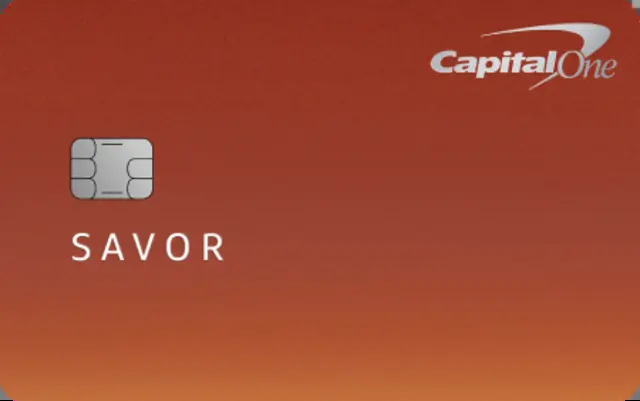
Image courtesy of Capital One.
Savor Student is the strongest all-around choice when groceries, dining, streaming, and entertainment make up a large share of your budget.
Why it fits
The 3% categories match common student expenses without quarterly activation, and the card can remain useful after graduation.
Key details
- Annual fee: $0
- Welcome offer: $50 cash bonus after $100 in purchases within three months
- Rewards: 8% on eligible Capital One Entertainment purchases; 5% on hotels, vacation rentals, rental cars, and activities booked through Capital One Travel; 3% at eligible grocery stores and on dining, entertainment, and popular streaming services; 1% on other purchases
- Foreign transaction fee: $0
- Intro APR: None advertised
- Regular APR: 18.74%–28.74% variable
- Credit positioning: No credit score required to apply on the product page; approval depends on the full application
- Student requirement: Currently enrolled, or admitted and planning to enroll within three months, at an accredited higher-education institution
Main limitation
Walmart, Target, and other superstores do not qualify as grocery stores. Merchant coding can also keep food counters, hotel restaurants, digital-wallet transactions, or third-party payments from earning 3%.
The 8% rate requires an eligible purchase through Capital One Entertainment, while 5% travel rewards require eligible Capital One Travel bookings. Compare portal prices and cancellation rules with booking directly.
Capital One’s current disclosure says there is no transfer fee for a balance transferred at the regular Transfer APR. A 4% fee applies to a balance posted at a promotional APR Capital One may offer. Confirm the terms shown with your application.
Check the current Savor Student offer, rates, and disclosures.
Discover it Student Cash Back: Best for no credit history

Image courtesy of Discover.
Discover says no credit score is required to apply. Approval is not guaranteed, but students without a credit file get a clearer starting point.
Why it fits
Cashback Match adds a dollar-for-dollar match of eligible cash back earned during the first year. The common-budget example below separates ongoing rewards from that one-time boost.
Key details
- Annual fee: $0
- Welcome offer: Automatic dollar-for-dollar match of first-year cash back
- Rewards: 5% in rotating quarterly categories on up to $1,500 in combined quarterly purchases after activation; 1% on other purchases
- Foreign transaction fee: $0
- Intro APR: 0% on purchases for six months
- Regular APR: 16.74%–25.74% variable
- Credit requirement: No credit score required to apply; approval still depends on the full application
- Student requirement: Designed for enrolled students; proof of enrollment may be requested
Main limitation
You must activate the 5% category each quarter. Spending above the $1,500 quarterly cap and purchases outside the active category earn 1%.
Discover has no foreign transaction fee, but acceptance can be less consistent outside the United States. Do not rely on it as your only card for a semester abroad.
If you want Discover’s first-year Cashback Match without quarterly activation, compare Discover it® Student Chrome. It earns 2% at gas stations and restaurants on up to $1,000 in combined purchases each quarter, automatically, then 1%.
Review Discover’s current offer, rates, and fees and 5% category details.
Capital One Quicksilver Rewards for Students: Best simple card
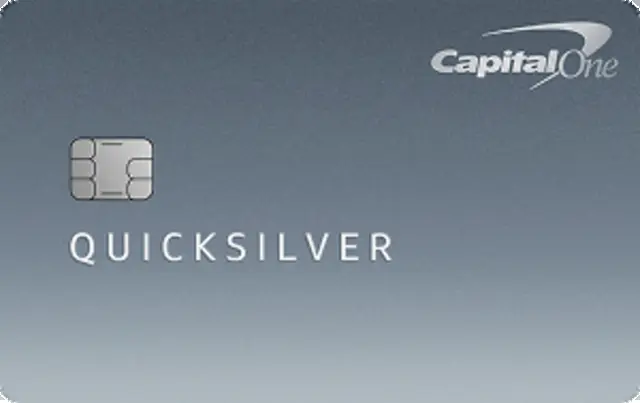
Image courtesy of Capital One.
Quicksilver Student is the easiest card here to manage. Everyday purchases earn the same 1.5% rate, with additional rewards through Capital One’s travel and entertainment platforms.
Why it fits
There are no rotating categories or quarterly caps, making it easier to focus on paying the bill instead of optimizing rewards.
Capital One lists both Quicksilver Student and Savor Student as options an eligible applicant may obtain with an Individual Taxpayer Identification Number, or ITIN. Compare the two by spending after confirming the application requirements in the international-student section above.
It is also our preferred study-abroad starting point because it has no foreign transaction fee and simpler rewards.
Key details
- Annual fee: $0
- Welcome offer: $50 cash bonus after $100 in purchases within three months
- Rewards: 5% on eligible Capital One Entertainment purchases and eligible hotels, vacation rentals, rental cars, and activities booked through Capital One Travel; 1.5% on other purchases
- Foreign transaction fee: $0
- Intro APR: None advertised
- Regular APR: 18.74%–28.74% variable
- Credit positioning: Fair credit; no guaranteed score cutoff
- Student requirement: The same enrollment definition as Savor Student
Main limitation
Simplicity can mean lower rewards when much of your spending fits Savor’s 3% categories or Discover’s activated categories. Use the same budget to measure the difference.
The Capital One transfer-fee structure is the same as for Savor Student: no fee at the regular Transfer APR and 4% for a balance posted at a promotional APR that may be offered.
Check the current Quicksilver Student offer, rates, and disclosures.
Bank of America Travel Rewards for Students: Conditional travel pick
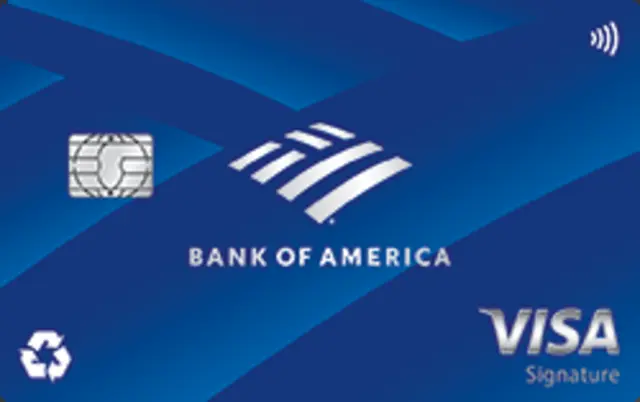
Image courtesy of Bank of America.
This card suits students who prefer travel and dining statement credits. The public product page does not promise approval without a credit score; that is different from a published requirement to have established credit.
Why it fits
Points can be used as a statement credit toward eligible travel and dining purchases. The 25,000-point offer is larger than the Capital One student-card bonuses.
Key details
- Annual fee: $0
- Welcome offer: 25,000 points after at least $1,000 in purchases within 90 days, worth $250 toward eligible redemptions
- Rewards: 3 points per $1 on eligible travel booked through BofA Travel; 1.5 points per $1 on other purchases
- Foreign transaction fee: $0
- Intro APR: 0% for 15 billing cycles on purchases and on balance transfers made within the first 60 days
- Regular APR: 17.74%–27.74% variable
- Balance-transfer fee: 3% during the first 60 days; 5% on future transfers
- Credit requirement: Bank of America publishes no minimum score; unlike Discover, it does not state that no score is required to apply
- Student requirement: Marketed to students, but the public listing does not provide a detailed enrollment definition
Main limitation
The “student” label should not be read as easy approval. Check Bank of America’s personalized offers before applying; the issuer says this check does not affect your credit score, but it still does not guarantee approval.
The bonus also requires $1,000 in spending within 90 days. Do not spend more than planned to reach it. Travel booked for 3 points per $1 must go through Bank of America’s portal, so compare prices and cancellation terms.
Review Bank of America’s current card listing, rates, and fees and check personalized offers without affecting your credit score.
What would you earn on a $700 monthly budget?
Illustrative budget: $700 a month, or $8,400 a year: $200 at eligible grocery stores, $150 dining, $40 eligible streaming and entertainment, and $310 elsewhere. No portal purchases, interest, fees or extra spending to earn bonuses. These are calculations, not promised rewards.
| Card | Annual rewards before bonus | First year if eligible |
|---|---|---|
| Savor Student | $177.60 | $227.60 with the $50 bonus |
| Quicksilver Student | $126.00 | $176.00 with the $50 bonus |
| Discover Student Cash Back | $164.00 | $328.00 including Cashback Match |
How the math works: Savor: ($390 × 3% + $310 × 1%) × 12. Quicksilver: $8,400 × 1.5%. For Discover, assume $500 of the same spending qualifies in each activated quarter: $2,000 × 5% + $6,400 × 1% = $164. Actual quarterly categories may not fit that budget; with no 5% spending, the annual amount is $84 before the first-year match.
Savor earns $51.60 more a year than Quicksilver in this example. If only $175 of a $700 monthly budget qualifies for Savor’s 3% categories, the two earn the same amount before bonuses. That makes your actual store mix more useful than the headline rewards rate. For that break-even decision, see Savor Student vs. Quicksilver Student on the same college budget.
Two situations that change the answer
You plan to study abroad
Start with Quicksilver Student for simple rewards or Savor Student if its categories fit your spending. Consider Bank of America Travel Rewards Student if travel and dining statement credits fit your plans and its application requirements fit your situation. Carry a backup payment method regardless of which card you choose.
Compare Quicksilver Student vs. BofA Travel Rewards Student for study abroad, then check currency choices, acceptance and payment mistakes to avoid overseas. For more options, see our no-annual-fee travel card guide.
You expect to carry a balance
Rewards should not drive the decision. A $1,000 balance at roughly 25% APR can generate about $250 in interest over a year if the balance stays near $1,000, far more than most students earn in rewards. Consider a verified 0% purchase offer only for a necessary expense with a written payoff plan.
Five habits that matter more than rewards
Your first step after approval: Use our first-week credit card setup checklist to set up payments, alerts, and a manageable first purchase before focusing on rewards.
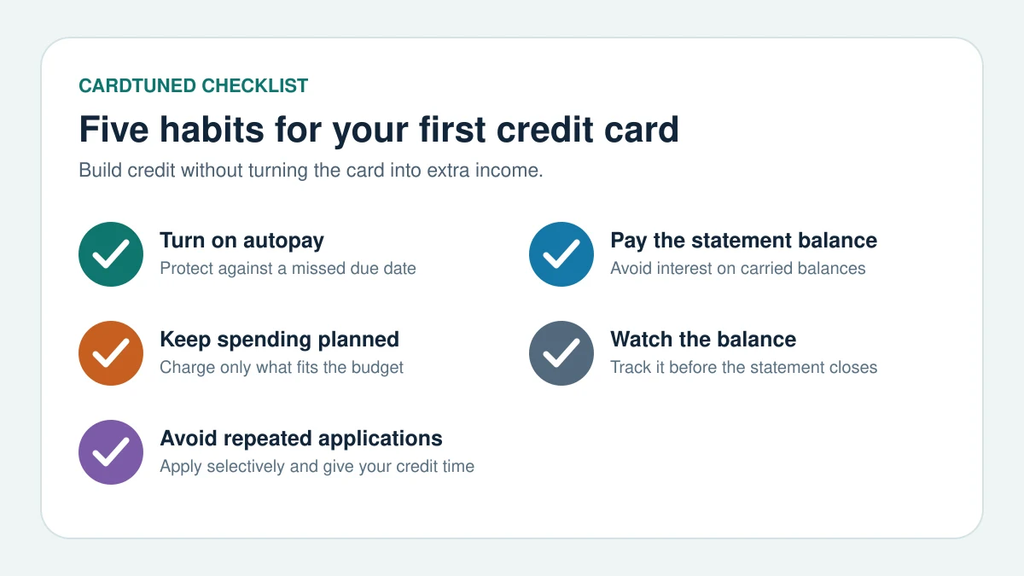
A first card works best as a credit-building tool, not as extra income.
- Turn on autopay. At minimum, protect yourself from an accidental late payment.
- Pay the full statement balance. When a grace period applies and you are not already carrying a balance, paying in full by the due date generally avoids interest on new purchases. You do not need to pay interest to build credit.
- Use the card for planned expenses. One bill or grocery trip is enough to build payment history.
- Watch the balance. Student cards may begin with low limits, so ordinary purchases can create high utilization. For example, a $150 reported balance on a $500 limit is 30%. See how statement timing differs from the payment due date.
- Avoid repeated applications. If denied, read the adverse-action notice before trying another card.
Frequently asked questions
Can a student get a credit card with no credit history?
Yes, although approval is never guaranteed. Discover says no credit score is required to apply for its student cards. Capital One designs its student cards for limited or no history, and Savor’s product page also explicitly says no credit score is required to apply.
What credit score do I need?
There is no universal minimum. Issuers also evaluate income, debt, identity information, and payment history. Bank of America does not publish a minimum score for its Travel Rewards student card, so check for personalized offers before applying.
Is a student card better than a secured card?
Try a suitable no-annual-fee student card first if you meet its requirements. A secured card requires a refundable deposit and can be a useful fallback if you cannot qualify for an unsecured card.
Should I choose rewards or a 0% intro APR?
Choose rewards when you will pay in full. A 0% offer matters more for a necessary purchase with a payoff schedule; any balance left when the promotion ends becomes subject to the regular APR.
Which student credit card should you choose?
Choose Savor if eligible food and entertainment purchases dominate your budget; choose Quicksilver if one everyday rate is more useful.
Choose Discover if you will manage the quarterly categories; consider BofA if you qualify and will use its travel and dining credits.
Consider another route if enrollment, identification, income or credit requirements do not fit, or if you cannot repay planned purchases.
Next guide: Before closing or replacing a student card, check what happens to the card after graduation.
Editorial update — October 11, 2026: Added an issuer-by-issuer eligibility and document comparison, clarified unconfirmed ITIN policies, and refreshed the displayed Capital One student and Discover purchase APRs from the linked product pages. Layout and reading order were also reviewed. This is a targeted check, not a new verification of every offer, fee or benefit.
Verification scope and editorial notes
Selected terms checked October 30, 2026: purchase APRs and advertised introductory purchase periods for the four main cards; Capital One student bonuses, rewards and ITIN guidance; Discover Cashback Match and quarterly maximum; and BofA’s online bonus, transfer window and transfer fees. The displayed APRs belong to the linked public offers and may change or differ by application path. Review your own application disclosures. This was not a new review of every agreement, benefit, fee or issuer’s underwriting criteria.
Current sources: Savor Student; Quicksilver Student; Capital One’s student rewards comparison; Capital One ITIN guidance; Discover Student Cash Back; Discover’s quarterly reward maximum; BofA Travel Rewards Student.
Earlier review: The initial card-terms review was August 27, 2026. The eligibility table and document examples were added in the targeted October 11 review described above.
October 6, 2026 update: Added the first-card decision path and the common-budget rewards comparison, with targeted Capital One bonus and Discover Cashback Match checks.
Editorial disclosure: CardTuned selects recommendations based on reader fit and published card terms. Compensation, when applicable, does not determine our recommendations. Read our editorial policy, card evaluation standards, and advertiser disclosure.